FBR Digital Invoicing for Manufacturers in Pakistan
Pakistan’s manufacturing industry is entering a new era of tax compliance through FBR Digital Invoicing. As part of its digital transformation strategy, the Federal Board of Revenue (FBR) has introduced mandatory electronic invoicing to improve transparency, eliminate fake invoices, enable real-time transaction reporting, and strengthen tax compliance.
Manufacturers are among the key sectors required to implement Digital Invoicing under the applicable legal framework. Whether your business manufactures pharmaceuticals, textiles, garments, chemicals, food products, FMCG products, plastics, engineering goods, or industrial equipment, compliance with FBR Digital Invoicing is now an essential business requirement.
This guide explains everything manufacturers need to know, including the latest legal framework, SRO references, implementation process, compliance requirements, penalties, and best practices.
What is FBR Digital Invoicing?
FBR Digital Invoicing is a real-time electronic invoicing system that enables registered businesses to generate structured electronic tax invoices and transmit invoice information electronically to FBR.
Once the invoice is validated, FBR issues a unique Invoice Reference Number (IRN) confirming successful registration. The validated invoice becomes part of the taxpayer’s official digital record.
The objective is to modernize Pakistan’s tax administration while improving transparency and reducing invoice fraud.
Why Has FBR Introduced Digital Invoicing?
The Digital Invoicing initiative aims to:
- Improve tax transparency
- Eliminate fake and duplicate invoices
- Enable real-time invoice reporting
- Reduce tax evasion
- Strengthen documentation of business transactions
- Improve audit efficiency
- Promote digital transformation
- Increase government revenue through better compliance
Is Digital Invoicing Mandatory for Manufacturers?
Yes.
Manufacturers notified by FBR are required to integrate their invoicing systems with the FBR Digital Invoicing platform and electronically report sales tax invoices in accordance with the prescribed legal framework.
Businesses should monitor the latest FBR notifications to ensure timely compliance with applicable implementation deadlines.
Legal Framework Governing Digital Invoicing
FBR Digital Invoicing is governed by Pakistan’s sales tax laws and statutory notifications.
- Sales Tax Act, 1990
The Sales Tax Act, 1990 provides the legal authority for electronic tax administration, invoice verification, audits, enforcement, and penalties.
Sections 23(5) and 23(6) empower FBR to require specified persons to integrate their electronic invoicing systems with FBR for real-time reporting of sales transactions.
- Sales Tax Rules, 2006
The Sales Tax Rules, 2006 prescribe procedures relating to electronic tax invoices, digital record maintenance, system integration, invoice formats, and compliance obligations.
- Rule 150Q – Sales Tax Rules, 2006
Rule 150Q establishes the legal framework for Digital Invoicing.
The Rule requires notified registered persons to:
- Generate electronic tax invoices.
- Transmit invoices electronically to FBR.
- Maintain electronic invoice records.
- Follow the prescribed technical standards and integration procedures.
Latest SRO References
S.R.O. 69(I)/2025
Issued on 29 January 2025, this notification introduced Chapter XIVA – Electronic Invoicing into the Sales Tax Rules, 2006 and established the legal framework for FBR Digital Invoicing.
It introduced Rule 150Q and prescribed the requirements for electronic invoice generation, transmission, and record retention.
S.R.O. 709(I)/2025
Issued on 22 April 2025, this notification expanded mandatory Digital Invoicing to notified corporate and non-corporate registered persons and introduced phased implementation timelines.
It requires businesses within scope to electronically generate and report sales tax invoices through FBR’s Digital Invoicing system.
S.R.O. 1413(I)/2025
Issued on 1 August 2025, S.R.O. 1413(I)/2025 significantly expanded the Digital Invoicing framework by requiring all sales tax registered persons to integrate with FBR’s computerized system through licensed integrators and issue electronic sales tax invoices according to the prescribed implementation schedule.
This notification broadened the scope of mandatory compliance beyond the earlier phases and forms the principal notification for nationwide rollout.
Sales Tax General Order No. 01 of 2026
Issued on 30 March 2026, Sales Tax General Order No. 01 of 2026 provides operational guidance for implementing the mandatory Digital Invoicing regime.
The General Order introduced several important clarifications:
- Registered persons may engage one or more FBR-licensed integrators where required.
- Electronic invoices may be cancelled, edited, or deleted within 72 hours of issuance through the FBR system if the correction is due to a bona fide mistake.
- Amendments after 72 hours require prior approval from the concerned Commissioner Inland Revenue.
- Businesses must maintain proper controls over invoice issuance and correction procedures.
Which Manufacturers Must Comply?
Digital Invoicing applies to manufacturers notified by FBR, including businesses involved in:
- Pharmaceutical Manufacturing
- Textile Manufacturing
- Garment Manufacturing
- Food Processing
- Beverage Manufacturing
- FMCG Manufacturing
- Chemical Manufacturing
- Plastic Manufacturing
- Steel Manufacturing
- Paper Manufacturing
- Electrical Equipment Manufacturing
- Consumer Goods Manufacturing
- Industrial Products Manufacturing
How Does Digital Invoicing Work?
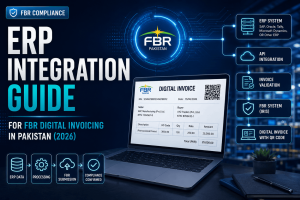
The Digital Invoicing process typically includes:
- Create a tax invoice in your ERP, billing, or accounting software.
- Submit the invoice electronically to FBR.
- FBR validates the invoice.
- Receive the Invoice Reference Number (IRN).
- Issue the validated invoice to the customer.
- Store the invoice electronically for audit and compliance purposes.
Benefits for Manufacturers
Digital Invoicing offers several operational and compliance advantages:
- Real-time compliance
- Faster invoice processing
- Reduced paperwork
- Improved production-to-sales tracking
- Better inventory management
- Reduced manual errors
- Accurate financial reporting
- Faster tax audits
- Secure digital records
- Greater customer confidence
Enforcement Measures
FBR has strengthened enforcement to ensure compliance.
Businesses that fail to comply may face:
- Compliance notices
- Regulatory inspections
- Tax audits
- Rejection of non-compliant invoices
- Recovery proceedings
- Disallowance of input tax where permitted by law
- Monetary penalties under the Sales Tax Act, 1990
Penalties for Non-Compliance
Failure to comply with Digital Invoicing requirements may result in enforcement under Section 33 of the Sales Tax Act, 1990 and other applicable provisions.
Consequences may include:
- Monetary penalties.
- Invalid tax invoices.
- Increased audit exposure.
- Delay in tax processing.
- Additional enforcement action for repeated violations.
- Possible denial of input tax credit where statutory requirements are not met.
Best Practices for Manufacturers
To ensure smooth compliance:
- Complete Digital Invoicing integration before the applicable deadline.
- Keep ERP and accounting software updated.
- Train finance and sales teams.
- Validate invoice information before submission.
- Maintain secure electronic records.
- Implement internal controls for invoice amendments.
- Stay updated with FBR notifications, SROs, and General Orders.
Why Choose NatureTech?
NatureTech provides complete FBR Digital Invoicing solutions for manufacturers across Pakistan.
Our services include:
- FBR Digital Invoicing Integration
- ERP Integration
- Accounting Software Integration
- API Development
- Invoice Automation
- Real-Time Invoice Reporting
- Testing & Deployment
- User Training
- Technical Support
- Ongoing Compliance Assistance
Our experienced implementation team ensures that your manufacturing business remains compliant while minimizing operational disruption.
Frequently Asked Questions
Is Digital Invoicing mandatory for manufacturers?
Yes. Manufacturers falling within the notified categories must comply with FBR’s Digital Invoicing framework.
Which laws govern Digital Invoicing?
The framework is governed by the Sales Tax Act, 1990, the Sales Tax Rules, 2006 (including Rule 150Q), S.R.O. 69(I)/2025, S.R.O. 709(I)/2025, S.R.O. 1413(I)/2025, and Sales Tax General Order No. 01 of 2026.
Can my ERP or accounting software be integrated?
Yes. Most modern ERP and accounting systems can be integrated with FBR’s Digital Invoicing platform through an approved integration solution.
What is the 72-hour rule?
Sales Tax General Order No. 01 of 2026 allows electronic invoices to be cancelled, edited, or deleted within 72 hours of issuance through the FBR system for bona fide mistakes. Changes after that require approval from the Commissioner Inland Revenue.
Does Digital Invoicing replace my ERP?
No. Your ERP or accounting software remains your primary business management system. Digital Invoicing enables compliant electronic reporting of tax invoices to FBR.